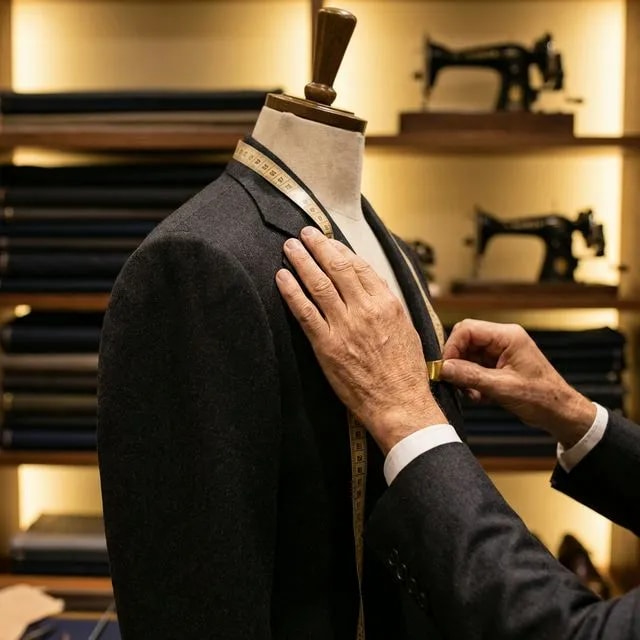
Leather, Fur & Suede Alterations in Carmichael
Luxury Materials Deserve Expert Hands
Specialty leather, fur, and suede work moves through the Antelope bench because the equipment that handles these materials honestly — cold-press tooling that protects suede nap, the leather-needle and thread weights matched to each finish, the fur-specific clamps and conditioning supplies — does not live at the Watt Avenue and Marconi Avenue counters Carmichael typically sees first. The repair stream that defines the Carmichael side of this category sits at the intersection of three durable patterns: weekend wear cycles that the American River Parkway lifestyle produces on functional leather, multi-generational households whose closets carry fur and leather-trimmed pieces forward across three or four owner-generations, and the steady mid-tier purchase flow off the Watt Avenue retail corridor. Assessment is in-person for any leather, fur, or suede work — walk in for a routine sleeve or zipper question, schedule an appointment for staged restoration or vintage-piece evaluation. Standard turnaround sits at five-to-seven business days; structurally complex work extends to eight to twelve; fur conditioning and vintage restoration can run two weeks once the condition assessment confirms what is realistic.
What this service looks like in Carmichael
A useful way to think about the Carmichael leather mix is by repair-cycle frequency rather than by material category, because that is how the bench actually plans capacity against it. The highest-frequency strand runs through functional leather outerwear that sees American River Parkway use — a riding jacket worn most weekends along the Ancil Hoffman side of the parkway, a hunt coat that goes into the wardrobe rotation for the equestrian-adjacent households on the parkway-edge grid, working leather that absorbs wear from the trail systems running through Sailor Bar and the bluffs corridor. The repair-cycle rhythm on this strand is predictable: zipper replacements every few seasons depending on the rider, elbow-and-shoulder reinforcement when the original construction starts thinning, lining swaps once the original interior has given up, occasional sleeve geometry corrections when a jacket changes hands within the household. We see the same Cooley Heights and Del Dayo households on three-and-five-year repair intervals, and the file-on-record carries the prior work forward so each round picks up against the structural history rather than restarting the diagnostic from zero. A second strand — slower-cycle but higher-stakes — runs through estate fur and leather-trimmed formal pieces in the multi-generational household. A grandmother's mink stole that has been in cedar storage for sixteen years, a leather-edged opera coat that crossed from a great-aunt to the family at probate, a vintage leather coat acquired by an Old Carmichael household in the 1970s that is finally being passed down — pieces like these arrive for the condition-then-restoration sequence, and the honest assessment conversation is where the project either gets greenlit, gets staged, or gets the difficult retirement recommendation. The third strand runs at the everyday volume end: Country Club Plaza specialty-shop suede, Loehmann's Plaza mid-tier leather, the occasional Town & Country Village boutique acquisition — pieces brought in for waist take-in, sleeve length, or hem adjustment work, where the suede-specific cold-press technique separates a clean result from one that flattens the nap permanently. Pricing across all three strands runs above the textile rate sheet because the material, the tooling, and the time investment are different in kind; we hand over the written estimate before any cut, and nothing starts without the explicit price confirmation from the client.
How It Works
Bring Your Garment
Bring your leather jacket, fur coat, or suede piece for a free in-person assessment and detailed quote.
Specialist Alteration
Your garment is handled by our master tailor using specialized needles, thread, and machinery designed for luxury materials.
Quality Check & Pickup
Every seam is inspected before handoff. Try it on in-studio to ensure a flawless fit.
Every leather, fur, or suede piece requires an in-person evaluation before any quote is final — there is no remote estimate path for these materials because the condition of leather backing, fur density, suede nap, and any inherited damage from prior wear or storage all need to be seen and handled. Walk-in works for the routine assessment (a zipper, a sleeve question, a fashion-leather alteration scope discussion); schedule an appointment when the project is structural (lining rebuild, panel reconstruction, vintage condition evaluation, estate-piece restoration sequencing). Bring the garment in the as-found condition you want assessed — do not pre-clean a vintage fur, do not attempt any home repair on a leather seam first. The written estimate covers scope and timeline, and the bench begins only after the explicit confirmation. Routine alteration delivers in five-to-seven business days; multi-panel structural rebuilds run eight to twelve; vintage restoration may extend toward two weeks once the assessment confirms what condition the piece can carry. Emergency expedited paths exist on simpler leather questions tied to a Carmichael wedding-week event — ask at intake whether the specific request fits.
Starting Prices
Prices vary based on garment type and complexity. Contact us for a precise quote.
Leather & Suede
- Jacket Hem / Shorten$75 and up
- Sleeve Shortening$85 and up
- Take In / Let Out$95 and up
- Zipper Replacement$85 and up
- Lining Replacement$120 and up
Fur & Specialty
- Fur Coat Resizing$150 and up
- Fur Collar / Cuff Adjustment$85 and up
- Shearling Alterations$120 and up
- Exotic Skin Repair$95 and up
Why Carmichael chooses us
Specialized Equipment
Industrial machines with Teflon feet, walking feet, and heavy-duty needles designed for leather and suede.
12+ Years Experience
Our master tailor has over a decade of experience working with luxury and exotic materials.
Preserve & Protect
We work with the grain of the material — no damage, no stretching, no compromised integrity.
There are three reasons households choose this bench over closer-to-home alternatives on leather and fur projects. The first reason is tooling: suede cold-press and nap-protection technique cannot be improvised on standard pressing equipment without damaging the surface finish, and most Carmichael-area counter operations either decline suede work outright or hand it to a third shop without disclosure. Leather-needle and thread selection has to match the weight and finish of each specific piece — what works on supple lambskin will tear a heavy bridle hide, what closes a calfskin seam cleanly will read wrong against a deer hide texture. Fur handling needs its own physical setup. We have all of it on one bench under one tailor. The second reason is the repair-cycle continuity that the American River Parkway functional-leather pattern depends on: a riding jacket whose original lining we replaced five years ago and whose elbow seams we reinforced two years after that comes back into the queue with the prior structural history on file, and the new round of work builds against that record rather than starting fresh diagnosis on a piece we have already learned. Households on three-and-five-year repair intervals get the benefit of accumulated knowledge of their own gear. The third reason is the estate-piece honesty about what each garment can realistically support: a fur stole that has been in poor storage for two decades carries different structural risks than a recent acquisition, and the assessment is the conversation where we either greenlight the work, propose a staged approach, or recommend retirement of the piece as a display rather than a wearable. Households trust the recommendation precisely because we sometimes give the difficult one rather than always-yes.
Frequently Asked Questions
About leather, suede and faux fur alterations in Sacramento
Leather, suede, and fur are alteration adjacencies — close enough to general tailoring that customers expect a tailor to handle them, far enough away that not every tailor should. The materials behave differently from woven cloth: every needle puncture is permanent, the surface marks under iron heat, the grain (or nap) catches light in directional ways that show seam direction. Working on these materials requires specialised tools, specialised technique, and a steady pace that does not transfer from textile work. Done badly, leather alteration ruins a garment that was probably expensive in the first place. Done well, it adds a decade of useful life.
Stitching Studio works on leather, suede, and faux fur regularly — primarily alterations rather than restoration. We will adjust sleeve length on a leather jacket, take in the waist on a leather coat, replace a lining, repair a torn seam. We are honest about the limits: we are not a furrier and we do not do full pelt restoration, and there are some leather garments we will decline because the construction precludes a clean alteration. Get in touch with photos of the garment if you are not sure whether we can help; we will give you a clear yes or no before you make the trip in.