When at-home alteration is the right call
The deciding factor is rarely the alteration itself — it is the wider situation. A bride who has spent weeks getting the dress hung and shoes broken in does not want to disassemble her bedroom to drive to a studio. A theatre production with twenty costumes that have to stay on rehearsal racks needs the tailor on site. A working family executive with a closet of suits that need waist suppression after weight change wants one evening at home with the tailor rather than five trips. Anyone with mobility constraints, postpartum recovery considerations, or chronic illness benefits from not having to travel.
For routine single-garment work — a pair of trousers that needs a hem, a dress that needs the waist taken in — at-home fitting is usually overkill and the standard in-studio alteration workflow is faster and cheaper. The economics flip around the third or fourth garment, when the time spent driving and waiting equals the studio call-out fee.
What an at-home visit looks like
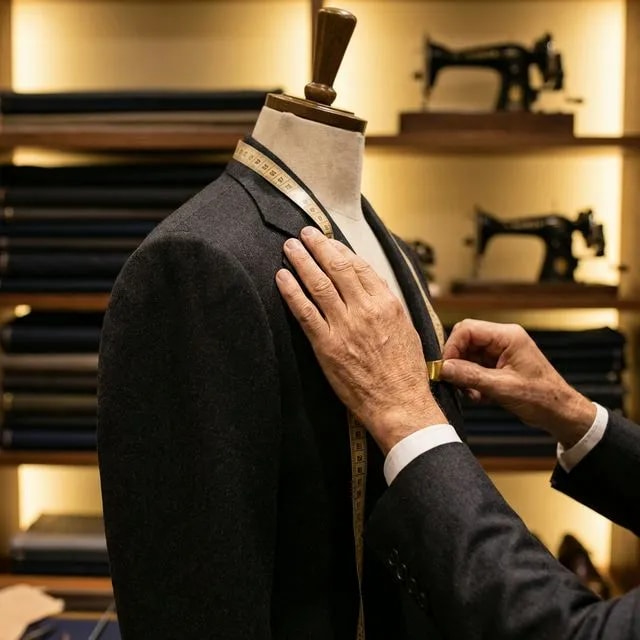
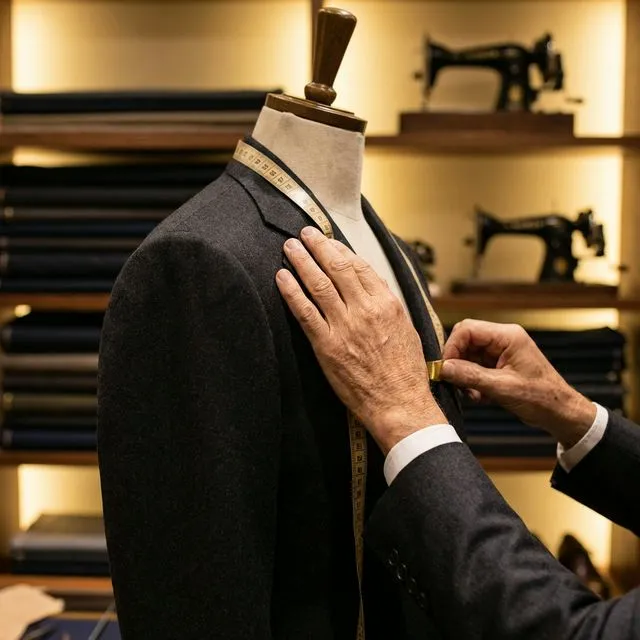
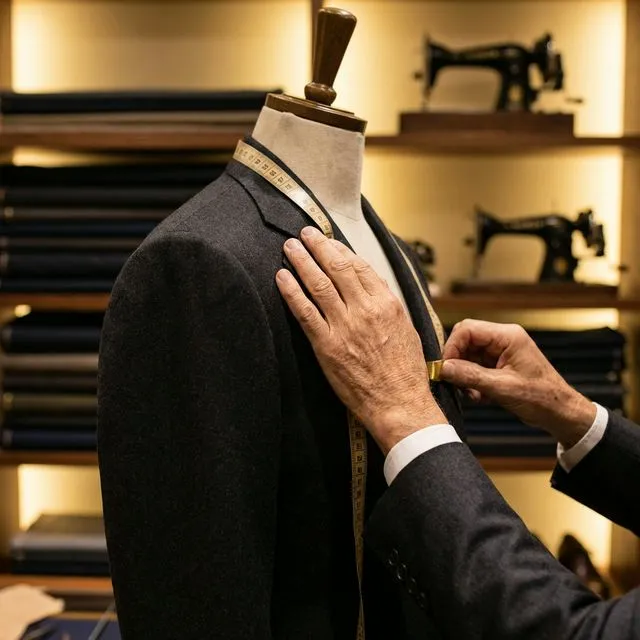
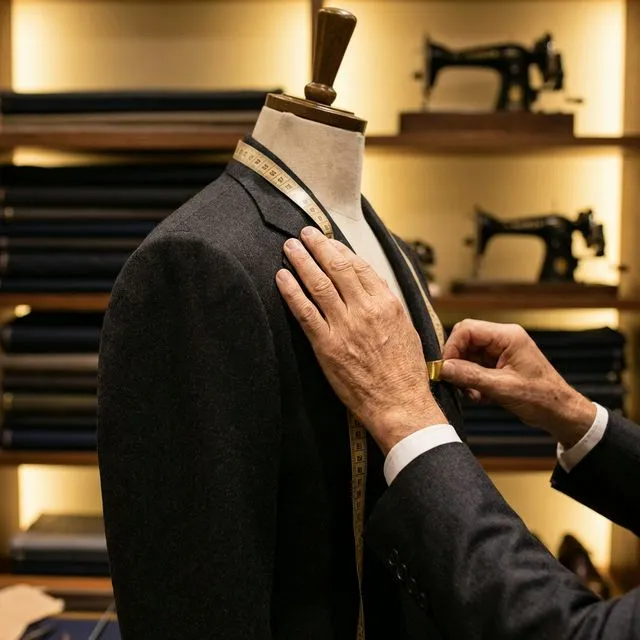
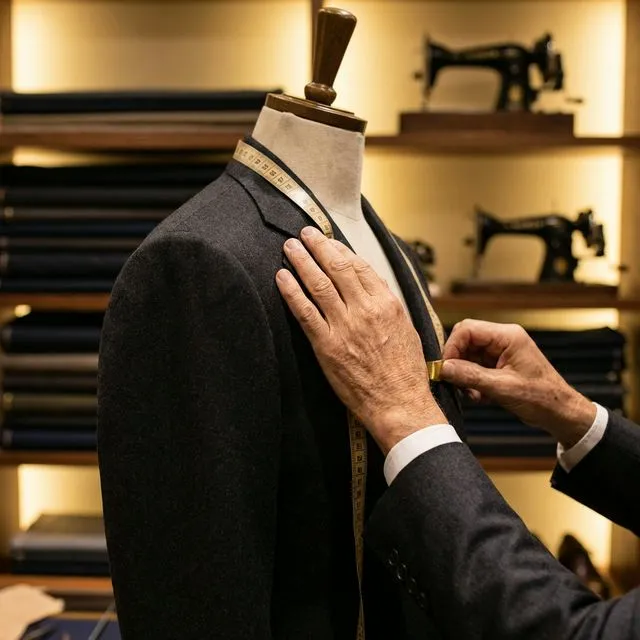
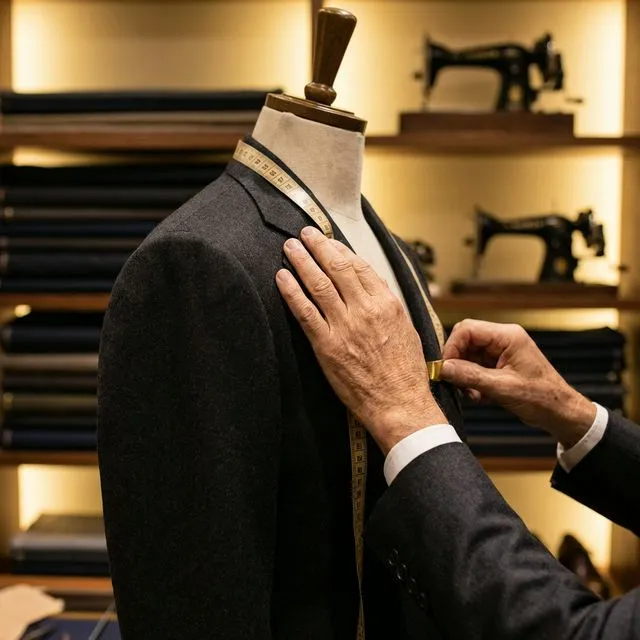
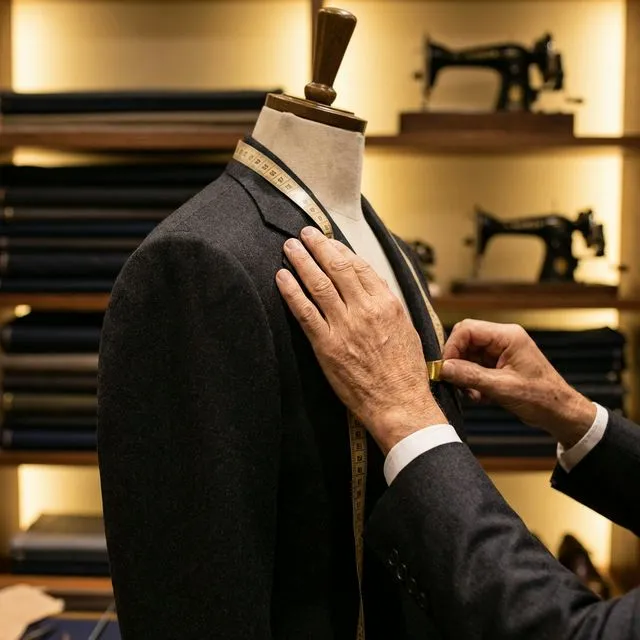
The first visit is about assessment. We arrive within the agreed window, look at the garments, identify what is possible and what is not, and pin everything that will be altered. Each pinned garment is photographed, measured, and tagged before it leaves with us — there is no "I will remember this fit" risk. We also discuss order of operations: when the bride wants the dress back, which of three suits has to be ready first, whether the final fitting should also be at home or whether the bride is happy to come to the studio.
Between visits the sewing happens at the studio under proper light, with the full machine inventory and the right thread for the project. Lace work, silk hand-finishing, bound buttonholes, replacing a zipper on a corset back — none of this should happen on someone's dining room table. The garment returns at the second visit for try-on; minor adjustments are pinned then and either finished on the spot (small hem corrections) or taken back for a third pass (anything structural). Most projects close in two visits.
What to prepare before the visit
Have the garments hanging within reach. Have the shoes you will wear with them. Have the undergarments — for bridal, the specific bra and any shapewear; for suits, the shirt you actually wear under each one. Pick a room with good natural light and a full-length mirror you can stand in front of without rearranging furniture. If the visit is for a wedding dress, designate one helper (mother, sister, maid of honour) who will be there for both visits and learn the bustle. Two hands during a bridal fitting are infinitely better than four.
What we bring
A travel kit with hand-sewing supplies, basic pinning tools, marking chalk, a portable steamer, a measuring tape, the project folder for any returning customer, and a compact tablet for showing references when needed. We do not bring sewing machines on visits — production sewing happens at the studio.
Pricing and how the visit fee works
At-home alterations are billed in two parts: a flat visit fee that covers the drive + the on-site fitting time, plus the per-garment alteration cost which is the same as if you came to the studio. The visit fee scales with distance from Antelope and with how many garments are being assessed; a single-garment visit is more expensive per garment than a six-garment visit because the fixed drive cost spreads further. Two visits are the norm. A third visit is rare and is only charged if the cause is on our side; if you change your mind about a hem length on the second visit, the alteration cost adjusts and the visit is on us.
For bridal parties we offer a flat-rate package that bundles all bridesmaid alterations into a single coordinated session — we come once to the bride's home or another central location, fit all dresses in sequence, and return once for the combined final fitting. This works particularly well in Roseville and Folsom where several party members often live within a short drive of each other and one of the bridesmaids has a long mirror in a good light.
What kinds of work travel well to at-home fittings
Most alteration types can be assessed and pinned at home, then completed at the studio: hems, taking in / letting out, sleeve length, jacket and dress waist suppression, bridal final fittings, custom clothing M2M measurement sessions, post-weight-change wardrobe overhauls, costume sizing for theatre and film, professional uniform alterations, and most repair work.
What does not travel well
Anything that requires the garment to be on a tailor's dummy continuously — multi-day projects where the same garment is on and off the form repeatedly — is better done at the studio. Leather and suede work is also better at the studio because the specialised tools and the smell of leather solvents do not belong in a customer's living room. Same for major construction with heavy interior reshaping; the volume of fabric pieces during the process exceeds what an at-home setup can handle cleanly.
Service area and scheduling
We cover most of the Sacramento metro within a 30-mile drive of Antelope, including Sacramento, Roseville, Folsom, Citrus Heights, Elk Grove, Carmichael, and surrounding neighborhoods. Visits further out — Davis, Auburn, Lincoln, Woodland — are possible and quoted individually because the drive cost is higher.
Booking lead time is typically 1–2 weeks for normal visits and 2–4 weeks during peak bridal and prom seasons. Rush visits within 72 hours are sometimes possible during slower periods of the calendar; if your situation is urgent, call rather than email and we will tell you honestly what is feasible.
Privacy, professionalism, and what we expect on both sides
In-home work is a relationship of mutual respect. We arrive on time, in professional clothes, with shoes that come off at the door if asked. We do not photograph the home or any belongings except the garments being worked on. We do not share customer details with anyone outside the studio. In return we ask that pets be settled before we arrive (large dogs and pins do not mix), that the fitting room is reasonably tidy, and that the agreed time window is respected — long delays at the start of a visit cascade into the rest of the day.
Climate, fabric, and the Sacramento home environment
Sacramento homes run hot in summer and cool in winter, and that affects how garments behave during fittings. A jacket pinned in a 78°F living room sits differently from the same jacket pinned in a climate-controlled studio — the wool relaxes, the lining slides, the cuff sits a quarter inch lower than it would have. We compensate for that on the pin marks, but it is worth knowing: an in-home fitting in mid-July produces measurements that account for summer wear, and an in-home fitting in January accounts for layering. The studio environment is constant; the home environment changes by season. For garments worn year-round we usually take a second set of measurements at the studio before final sewing to cross-check.
Humidity matters for some fabrics — linen, silk, and certain wools shift dimensions with moisture. Pinning a silk dress on a humid summer evening produces a different result than pinning it on a dry winter morning. We bring a small hygrometer to bridal and high-stakes fittings; the reading goes into the project notes so the studio team knows what conditions the pin marks were captured in.
Coordinating with other vendors
For weddings, in-home fittings often happen in parallel with hair-and-makeup trials, photographer scouting visits, and florist consultations. We can schedule around those, and we routinely coordinate directly with the other vendors when the customer asks us to. The most common request is to time the alteration calendar so the final fitting falls inside the same week as the hair trial — that way the bride can see the dress, the hair, and the makeup together once before the day, and any veil-to-hair adjustments can be made by us in real time. The day-of coordination is the bride's responsibility, but the alteration calendar can absorb most of the synchronisation if planned 6+ weeks out. Customers in Roseville and Folsom particularly benefit from coordinated scheduling because their wedding vendor networks tend to be tight-knit and a single shared timeline saves everyone work.
Frequently asked questions about at-home fittings
Do you take cash on site? Yes, plus card and ApplePay through a portable reader. Most customers pay the visit fee at the first visit and the alteration cost at the final delivery. Do you work in apartments without elevators? Yes, walk-ups are no problem within reason. Can you fit multiple family members in one visit? Yes, that is one of the most common patterns — a husband-wife pair refreshing a season of work clothes, a mother-and-daughter combination before a graduation, a whole household before a holiday trip.
Can you do an in-home consultation if I am not sure what to alter? Absolutely. About a third of in-home visits start as "I have a lot of clothes I am unsure about — can you look at them with me?" Bring everything to one room and we will sort what is worth altering, what is not, and what to consider replacing instead. There is no obligation to proceed with any specific item; the visit fee covers your time and ours regardless. Get in touch to book a session.