When custom clothing is the right investment
Custom makes sense when off-the-rack consistently fails you in a measurable way: shoulders too wide, sleeves too long, jackets that gape at the chest, trousers that fit the waist and bunch at the seat. It makes sense when you wear the same kind of garment often enough that the per-wear cost calculation works — a custom suit worn weekly for three years is cheaper per wear than two off-the-rack suits replaced annually. It makes sense for occasions where the fit matters disproportionately: wedding clothes for the groom and groomsmen, professional uniforms for someone on television, ceremonial clothes for the head of a household.
Custom does not make sense for everything. A casual t-shirt? Wear retail. A pair of jeans for the weekend? Standard tapering or hemming on a retail pair beats custom denim on cost. A garment you will outgrow in six months (kids' clothes, maternity, post-surgery recovery wear)? Not custom territory. We will tell you this at the consultation; there is no reason to oversell.
M2M vs. bespoke vs. semi-bespoke
Made-to-measure starts with a base pattern (a standard size in the closest stock measurements to yours) and adapts it to your measurements at construction time. It is the most common form of "custom" and the fastest. Bespoke starts with no pattern; the tailor drafts one from scratch based on your unique measurements, builds a test garment in inexpensive cloth (the "muslin" or "toile"), adjusts based on your wear of the muslin, and then constructs the final garment in your chosen cloth. Bespoke produces a marginally better fit and takes longer; M2M produces a 90% fit at 60% of the time and cost.
Semi-bespoke is the middle path: M2M plus a single intermediate fitting where we work directly on your body during construction. Most of our custom work is semi-bespoke. It is the right answer for almost everyone unless you are specifically chasing full bespoke for the experience or for a body shape that no base pattern flatters.
Cloth selection
Cloth is the line item that varies the most in a custom budget — a wool suit in a workhorse Italian cloth is dramatically different in price from a luxury English bespoke cloth, and both might be appropriate depending on what you want. At the consultation we walk you through cloth options that match your budget, your climate, and the wearing frequency you expect. Lighter cloths breathe better in Sacramento summers; heavier cloths drape better and last longer for daily wear. There is no single right answer.
Construction options
Full canvas vs. half canvas vs. fused on jackets. Hand-pad-stitched lapels vs. machine-stitched. Working buttonholes on the sleeves vs. decorative. Lined vs. half-lined vs. unlined. These choices affect both price and longevity; full canvas hand-padded jackets cost more but drape better and outlast fused jackets by years. We explain the trade-offs at the consultation and recommend based on how the garment will be worn.
The fitting timeline
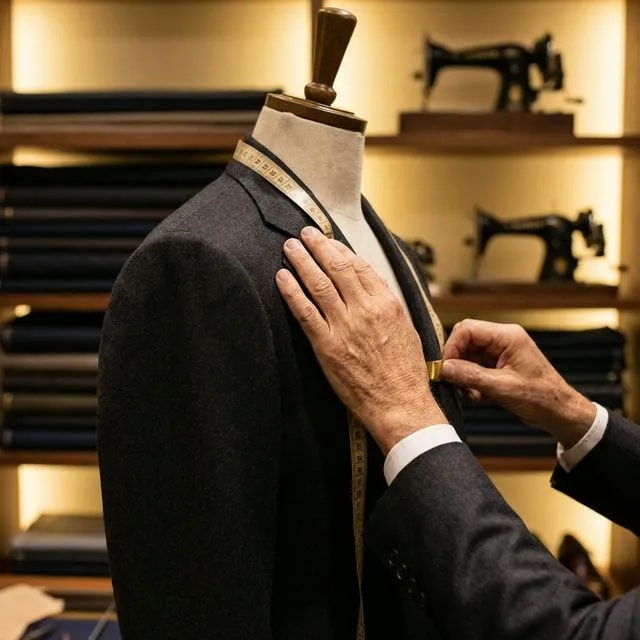
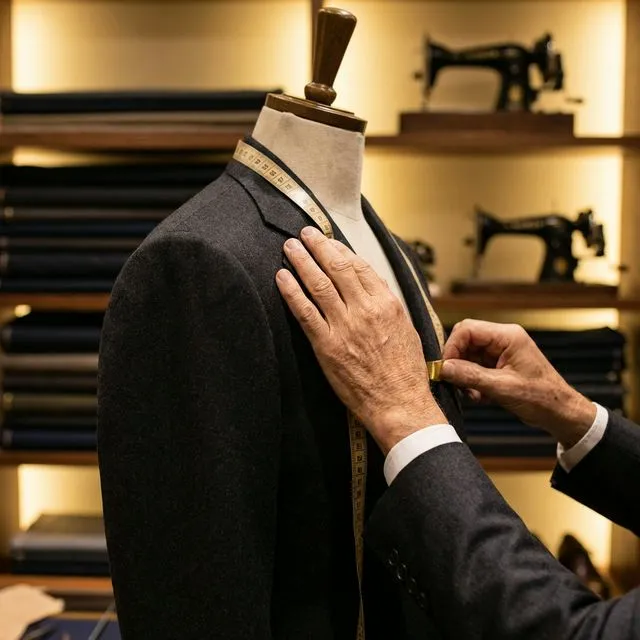
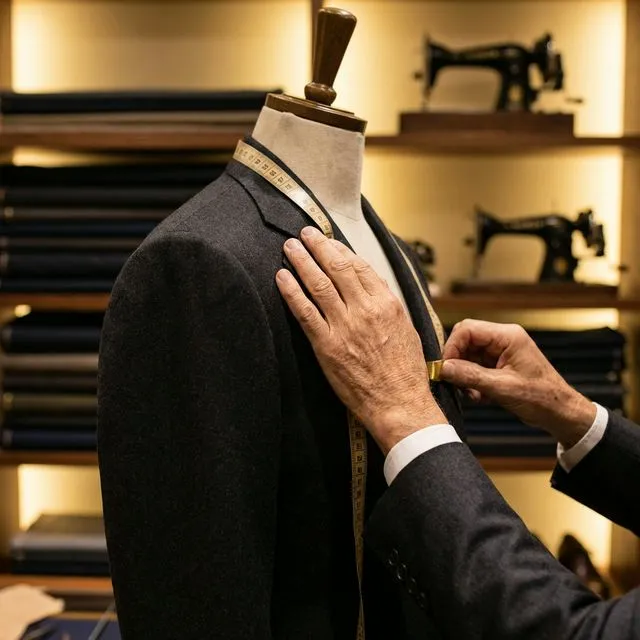
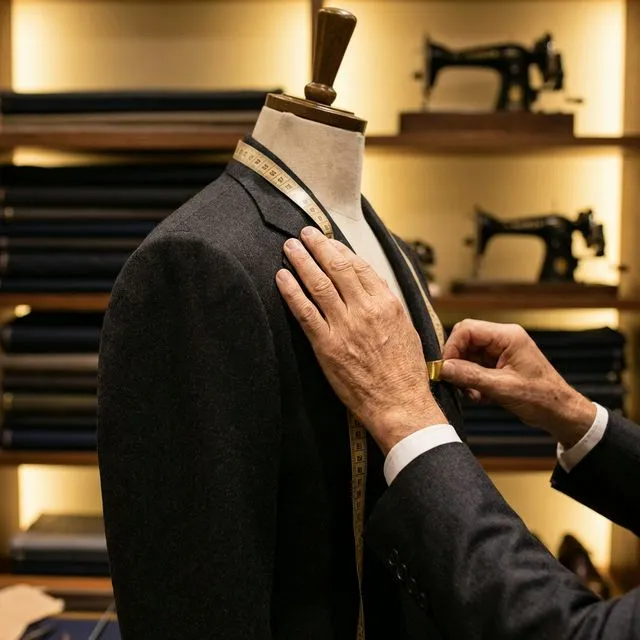
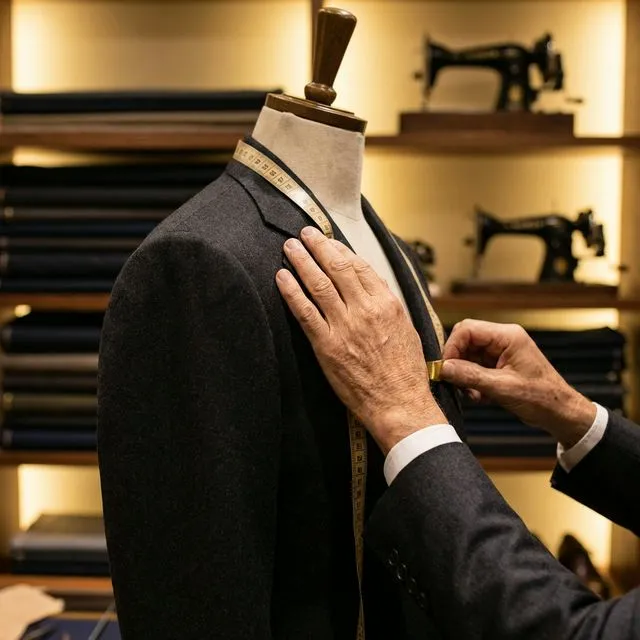
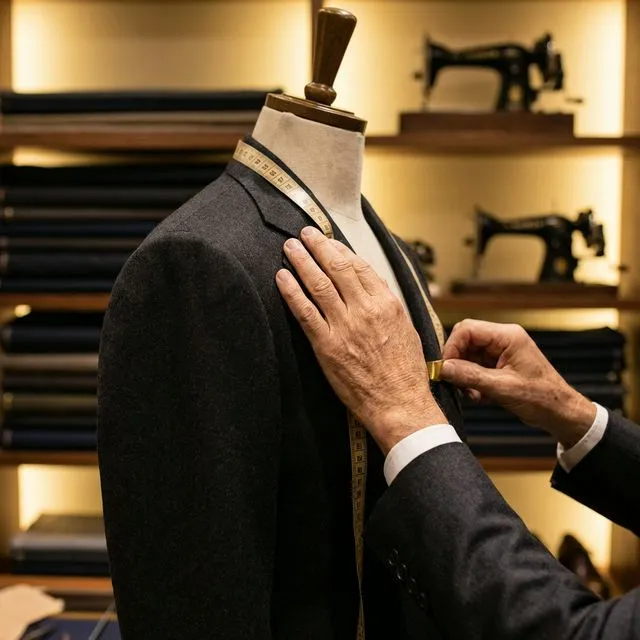
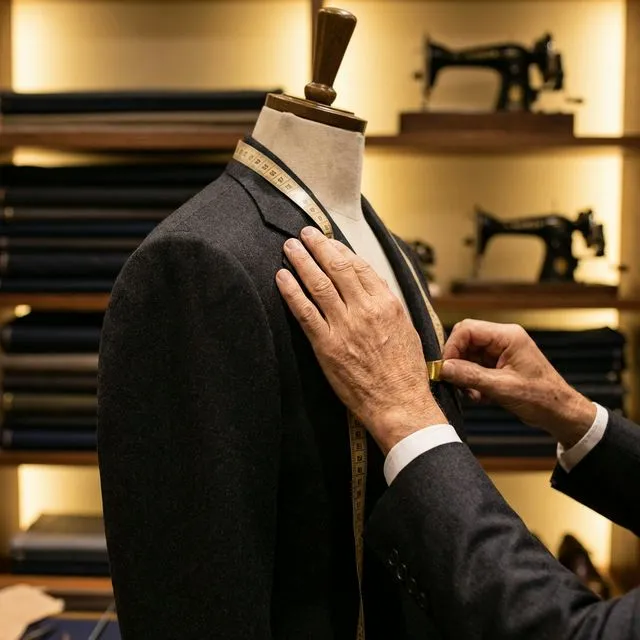
Consultation (free, 45–60 minutes): we discuss the project, take measurements, look at cloth, agree on construction options, and produce a written quote. First fitting (3–4 weeks after order placement): a baste-stitched version of the garment in your cloth, fitted on your body. Major adjustments happen here — sleeve angle, jacket length, trouser rise. Second fitting (1–2 weeks after first): the garment is closer to finished; we check fit refinements and detail work. Final delivery (1–2 weeks after second fitting): the finished garment ready for wear, with one complimentary "settling" adjustment available within 30 days if anything needs a tweak after a few wears.
Bridal and formal custom
Custom wedding clothing is one of the most rewarding projects to make. For grooms we do full custom suits; for brides we do custom modifications on existing dresses (we are not a from-scratch bridal house, but bridal alteration covers the deep modification work that bridges into custom). For groomsmen we offer coordinated M2M shirts and trousers when uniformity matters across the party. Formal custom for galas, theatre premieres, and award nights is also a routine project.
Care and ownership
A custom garment is built to outlast its retail equivalent by years. To get the full lifespan, treat it accordingly: hang on a shaped hanger between wears, dry-clean less often than you might expect (a wool suit needs cleaning two or three times a year at most if it is rested and brushed between wears), press gently and through a press cloth, store flat in summer if the wardrobe is hot. We provide a one-page care sheet with every custom delivery and a free first-year service that covers minor repairs, button reattachment, and a one-pass press.
Pricing in plain English
Custom is priced as cloth + construction + (for bespoke) pattern drafting. The cloth is the most variable; construction scales with how detailed the build is. For a useful range: a custom shirt in a good Italian cotton runs in the lower hundreds; a M2M wool suit runs in the mid four figures; semi-bespoke for the same in a higher-grade cloth runs higher; full bespoke runs significantly higher again. The consultation produces a precise number for your specific project; we do not work on "we will see what it costs" terms.
How fabric choice shapes the final garment
The fabric is the single most consequential decision in a custom project — more important than the construction details, more important than the cut. A medium-weight Italian flannel makes a different suit than a tropical weave English worsted, even with the exact same pattern and construction. The fabric determines how the garment drapes, how it handles heat and humidity, how it ages, and how it photographs. We spend more time at the consultation on fabric than on anything else, and the right answer for you depends heavily on how often you will wear the garment and in what conditions.
For Sacramento summer wear, lightweight cool wools, fresco weaves, and high-twist hopsacks breathe well and resist creasing. For winter and indoor formal occasions, mid-weight flannels and worsteds drape better and carry their shape longer through a long evening. For year-round daily wear, a medium-weight worsted in a versatile colour is the workhorse choice. We keep books from several mills in the studio and ship physical swatches if you want to handle the cloth before committing.
The first wear and what to expect
A new custom garment feels slightly different from anything off the rack — even when the difference is favourable. Suit jackets in fresh cloth often feel marginally stiff for the first three or four wears as the canvas and lining settle against your body. Shirts in fresh cotton soften noticeably after the first wash. The shoulder seam on a new jacket sometimes sits a hair higher than you are used to before the cloth relaxes into the shape. Custom garments are not broken on day one — they are about to become exactly themselves over the following weeks, and the first month is part of the process. We always offer one no-cost settling adjustment in the first 30 days for exactly this reason: a small tweak after the cloth has relaxed is often the difference between a good garment and a great one.
Custom for women
Custom is not just for menswear. We do custom dresses, custom blouses, custom tailored trousers, and custom jackets for women — the same M2M and semi-bespoke processes apply. For wedding work we handle the alteration side primarily (see bridal alteration), but for non-bridal events (galas, ceremonies, professional occasions) we will build a dress or a separate from scratch. Women's custom requires slightly more fitting iteration than men's on average because the construction in the chest and waist is more sensitive to small body variations; expect 3–4 fittings rather than the 3 typical for men.
Frequently asked custom questions
Can you copy a garment I already own? Within limits — we cannot literally reproduce a designer pattern, but we can build a garment to the same silhouette and fit. Can you adapt an existing pattern? Yes, our base patterns are flexible. Do I get to keep my pattern after the project? Yes, we archive it digitally and use it for future garments at no additional pattern fee. Sacramento metro customers typically come in for the consultation and the fittings; out-of-area customers we have worked with by mailing test garments and using video for cloth selection.
What happens if my body changes during the project? Most projects can absorb 5–10 pounds of variation; significant changes mid-project trigger a refit. We will work with you to find the right path forward — sometimes that means pausing the project, sometimes adapting in-flight. Reach out and we will talk through what makes sense.